
Plantar Fasciitis Treatment in Westport, CT
If your first steps out of bed each morning bring a sharp stab of pain in your heel, you may be dealing with plantar fasciitis — one of the most common causes of foot pain we see at CT Sports Recovery in Westport, CT. This guide walks through what causes plantar fasciitis, how to recognize it, and the treatment options — from stretching and orthotics to shockwave therapy — that can help patients throughout Fairfield County get back on their feet.
What Is Plantar Fasciitis?
Plantar fasciitis is inflammation of the plantar fascia, the thick band of tissue that connects your heel bone to your toes and supports the arch of your foot. The “-itis” in the name refers to that inflammation, which typically develops after the plantar fascia has been placed under excessive or repetitive strain. Left unaddressed, plantar fasciitis can become disruptive to everyday activities like walking, standing, and exercising.
What Causes Plantar Fasciitis?
Several factors can contribute to the development of plantar fasciitis, including:
- Overuse or repetitive stress — common among runners, athletes, and people with physically demanding jobs that involve a lot of time on their feet
- Poor footwear — shoes that lack proper arch support place extra strain on the plantar fascia
- Excess body weight — added pressure on the feet increases stress on the tissue with every step
- Age — the plantar fascia can lose elasticity and strength over time, and decades of weight-bearing can gradually damage the tissue on the bottom of the foot
Symptoms of Plantar Fasciitis
The hallmark symptom of plantar fasciitis is a sharp, stabbing pain in the heel, most noticeable during those first steps in the morning or after getting up from sitting for an extended period. Other common symptoms include:
- A dull ache in the foot that worsens with activity
- Soreness after prolonged standing or walking
- Stiffness in the foot, particularly in the morning
What to Do When Plantar Fasciitis Won’t Go Away
If your symptoms persist despite trying home care, there are several more advanced treatment options worth considering.
Rest & Ice
Taking a break from the activities that aggravate your symptoms gives the plantar fascia a chance to calm down. Applying ice to the area reduces inflammation and offers temporary relief from pain.
Stretching & Strengthening Exercises
Improving flexibility and building strength in the foot can reduce tension on the plantar fascia.
- Toe stretches: Flex and extend your toes repeatedly, or try “spelling the alphabet” in the air with your big toe to move the foot through a full range of motion.
- Foot intrinsic strengthening (towel scrunches): While seated, place a thin towel flat on the ground under your feet. Slowly scrunch the towel toward you using only your toes until it’s fully bunched up, then straighten it out and repeat.
- Barefoot walking on sand: Walking barefoot on the beach provides similar foot intrinsic strengthening benefits and can be a natural way to work these muscles.
Orthotic Devices
Custom orthotics or supportive footwear help distribute weight more evenly across the foot, reducing the concentrated strain that contributes to plantar fasciitis.
Physical Therapy
A physical therapist can design a personalized rehabilitation program that combines targeted exercises, manual therapy, and other modalities to address the underlying causes of your pain, not just the symptoms.
Shockwave Therapy
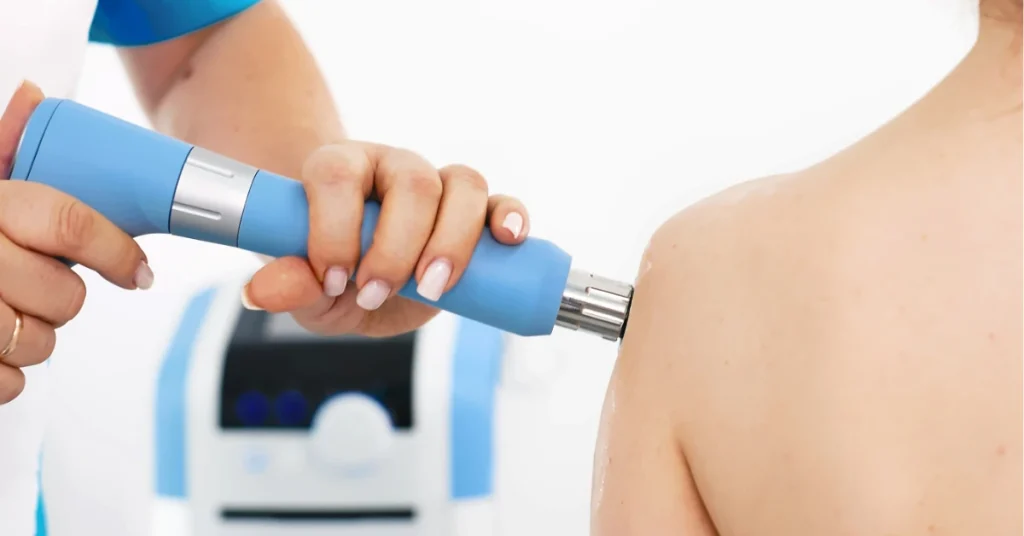
When conservative treatments haven’t provided lasting relief, shockwave therapy is an innovative, non-invasive option with promising results for chronic plantar fasciitis. This procedure delivers acoustic waves to the affected tissue to help stimulate healing and reduce pain.
How Shockwave Therapy Works
During shockwave therapy, high-energy sound waves are directed at the inflamed area of the plantar fascia. This process is thought to work by:
- Increasing blood flow to the area, which supports healing
- Stimulating collagen production, essential for tissue repair
- Reducing pain by disrupting local pain signaling pathways
Many patients report meaningful improvements in pain levels and mobility after just a few sessions.
Frequently Asked Questions
- How long does plantar fasciitis take to heal? Recovery time varies from person to person depending on how long symptoms have been present and how consistently home care and rehab exercises are followed. Many people see improvement within weeks of starting a structured approach, while chronic cases may take longer and benefit from options like shockwave therapy.
- Can plantar fasciitis go away on its own? Mild cases sometimes improve with rest, proper footwear, and stretching. However, ongoing strain without changes to activity or treatment can allow the condition to become chronic, which is why persistent heel pain is worth having evaluated.
- Where can I get plantar fasciitis treatment near Westport, CT? CT Sports Recovery is located on Main Street in Westport and provides physician-led evaluation and treatment for plantar fasciitis, including shockwave therapy, for patients throughout Fairfield County, including Norwalk, Fairfield, Weston, and Wilton.
Explore Your Achilles Tendinitis Treatment Options in Westport, CT
You don’t have to keep working around heel pain that won’t quit. Our physician-led team can evaluate your plantar fasciitis and help determine whether stretching and strengthening, orthotics, physical therapy, or shockwave therapy is the right path forward for you. Schedule an insurance-based initial evaluation at CT Sports Recovery to get started.
CT Sports Recovery — Recovery for the Relentless. 215 Main Street, Westport, CT 06880 · (203) 651-5090 · ctsportsrecovery.com