Supporting Degenerative Joint Pain: How EMTT May Help Improve Mobility and Reduce Discomfort
Degenerative joint pain often begins subtly—morning stiffness, discomfort when climbing stairs, or aching after activity. Over time, these symptoms can become more persistent and start to interfere with daily movement.
This pattern is common in conditions such as osteoarthritis affecting the hips, knees, shoulders, elbows, and hands, as well as spondylarthrosis (degenerative changes in the spinal joints) and chondromalacia (cartilage softening in the knee). These are all forms of wear-and-tear joint conditions that gradually affect how smoothly the joints function.
Why Degenerative Joint Pain Develops
Joint degeneration typically results from a combination of factors, including natural aging, repetitive mechanical stress, previous injuries, and a reduced ability of tissues to repair over time.
As cartilage gradually wears down, the protective cushioning in the joint decreases. This leads to increased friction between joint surfaces, irritation of surrounding tissues, and a cycle of inflammation and stiffness. As a result, everyday activities such as walking, gripping, bending, or lifting may become more difficult or uncomfortable.
How EMTT May Support Joint Health
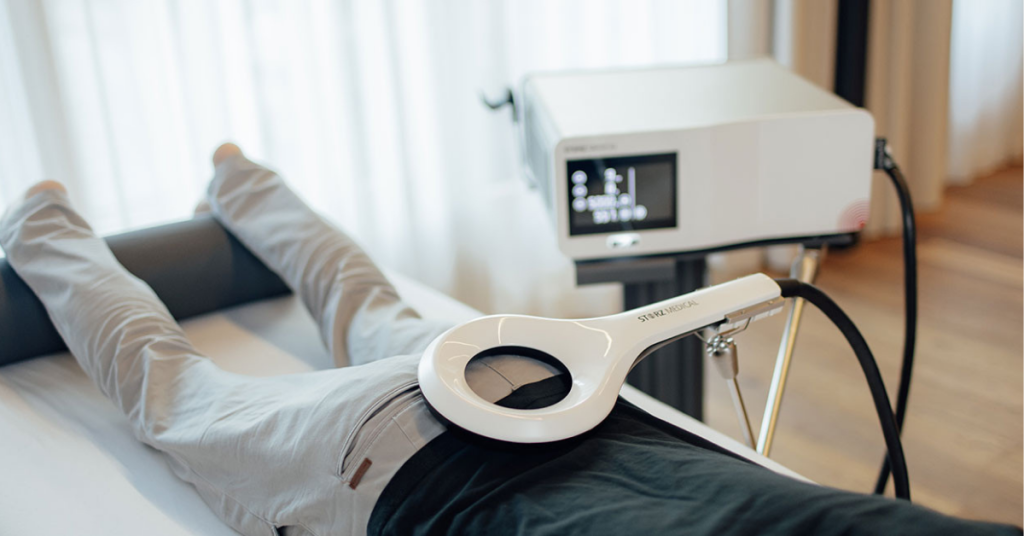
One non-invasive option used in the management of these conditions is Extracorporeal Magnetotransduction Therapy (EMTT). This therapy delivers high-energy magnetic pulses designed to interact with deeper musculoskeletal tissues and support the body’s natural recovery processes. At a biological level, EMTT may help by:
- Supporting cellular metabolism in affected joint structures
- Improving local blood flow and microcirculation
- Helping modulate chronic inflammation
- Supporting tissue repair and regeneration processes
Conditions Commonly Managed with EMTT
EMTT is often considered for individuals experiencing:
- Osteoarthritis of the hips, knees, shoulders, elbows, and hands
- Spondylarthrosis (degenerative spinal joint changes)
- Chondromalacia, particularly in the knee
- Other chronic degenerative or overuse-related joint conditions
What Sets EMTT Apart
Unlike approaches that focus only on temporarily reducing pain, EMTT is designed to support the underlying biological environment of the joint. By improving circulation and cellular activity, it aims to help the body function more efficiently in areas affected by chronic wear and degeneration. It is generally described as:
- Non-invasive
- Painless
- Free of required downtime
- Often used alongside rehabilitation and movement-based therapy
Supporting Long-Term Joint Function
Degenerative joint conditions usually develop gradually, and meaningful improvement also requires a consistent, long-term approach. Addressing inflammation, supporting tissue health, and maintaining joint mobility are all important parts of care.
At CT Sports Recovery in Westport, we provide physician-led treatment designed for individuals across Fairfield County who want to stay active and maintain quality of life despite pain or stiffness. Our focus is on combining advanced non-invasive therapies with rehabilitation strategies to support long-term joint function and movement.
Don’t let stiff, aching joints limit you. Call (203) 651-5090 to see whether EMTT may help, at CT Sports Recovery in Westport.
CT Sports Recovery — Recovery for the Relentless.
215 Main Street, Westport, CT 06880 · (203) 651-5090 · ctsportsrecovery.com
This article is intended for educational purposes only and does not constitute medical advice. Please consult a qualified healthcare provider for evaluation and treatment of any medical condition.