
Chronic Tendon Pain: Why It Won’t Go Away?
Acute Tendinitis vs. Chronic Tendinopathy: What’s the Difference?
When a tendon is first irritated, it’s often true “tendinitis” — an inflammatory response with swelling, warmth, and pain that typically improves within a few weeks of sensible rest and modified activity.
Chronic tendon pain is a different story. Over time, unresolved tendinitis can progress into tendinopathy (also called tendinosis) — a state in which the tendon fibers become disorganized and start to break down rather than staying inflamed. There’s often little classic swelling left; instead, the tissue itself has degenerated and lost some of its normal structure and strength.
This distinction matters because the two conditions respond to different approaches. Treating a degenerated tendon the same way you’d treat a fresh inflammatory flare-up is a common reason pain lingers for months or even years.
Why Tendons Take So Long to Heal
Tendons aren’t built like muscle. A few key factors explain why chronic tendon injuries can be so stubborn:
- Limited blood supply. Tendons receive far less blood flow than muscle tissue, which means the nutrients and repair cells needed for healing arrive slowly.
- Repeated load without recovery. Running, jumping, throwing, and repetitive job tasks place ongoing stress on tendons. Without adequate downtime, the tissue doesn’t get a chance to fully repair between bouts of loading.
- Disorganized collagen repair. Instead of laying down new fibers in a neat, aligned pattern, a chronically stressed tendon can produce disorganized collagen that is weaker and more prone to further micro-tearing.
- Accumulating micro-tears. Small tears that never fully heal can accumulate over time, gradually thickening and weakening the tendon.
Put together, these factors explain why chronic tendon pain often feels like it has a mind of its own — better for a while, then back again as soon as activity resumes.
Common Chronic Tendon Injuries We See in Westport & Fairfield County
Chronic tendinopathy can affect nearly any tendon in the body, but a handful of patterns show up again and again in our Westport clinic among runners, golfers, tennis players, and weekend warriors across Fairfield County:
- Achilles tendinopathy — pain and stiffness at the back of the heel or lower calf, common in runners and recreational athletes
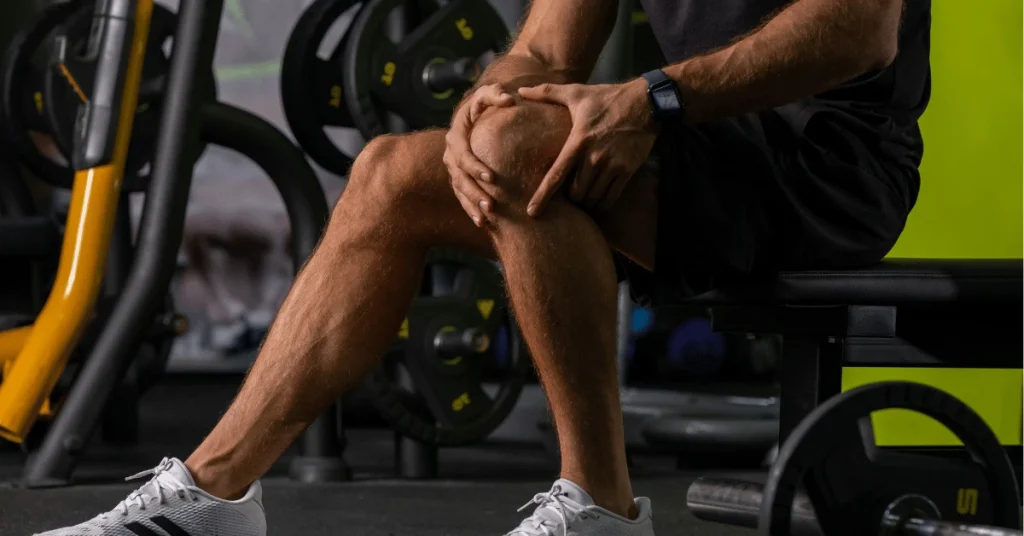
- Patellar tendinopathy (“jumper’s knee”) — pain just below the kneecap, often seen in basketball, volleyball, and running
- Tennis elbow and golfer’s elbow (lateral/medial epicondylopathy) — pain on the outside or inside of the elbow from repetitive gripping or racquet sports
- Rotator cuff tendinopathy — shoulder pain that worsens with overhead movement or reaching
- Gluteal and hip tendinopathy — pain on the outside of the hip, frequently mistaken for bursitis
- Plantar fascia issues — heel and arch pain, especially with the first steps in the morning
Why “Rest, Ice, and Ibuprofen” Often Isn’t Enough
For an acute injury, the classic advice — rest, ice, and an anti-inflammatory — makes sense. For a chronic, degenerated tendon, it’s often incomplete.
Rest can calm symptoms temporarily, but it doesn’t remodel tissue that has already broken down. As soon as activity resumes at the previous level, the same pain tends to return.
Long-term reliance on NSAIDs (ibuprofen and similar medications) may also blunt the body’s natural healing response over time, since some healing signals rely on the very inflammatory process these medications suppress.
Cortisone injections can provide meaningful short-term relief for pain and inflammation, but they don’t repair degenerated tendon tissue. Repeated cortisone injections have also been associated with weakening of the tendon in some cases, which is why many physicians reserve them for select, carefully considered situations rather than a first-line, repeat solution.
Warning Signs Your Tendon Pain Has Become Chronic
It can be hard to know when a nagging ache has crossed the line from “healing” to “chronic.” Common signs include:
- Pain that has lasted several months despite rest
- Stiffness or achiness with your first steps in the morning or after sitting
- Noticeable thickening or a lump-like feeling along the tendon
- Pain that reliably returns as soon as you resume your normal activity level
If several of these sound familiar, it’s a signal that the tendon may need an active healing stimulus rather than continued waiting.
A Physician-Led Approach to Healing Chronic Tendinopathy
The encouraging news is that chronic tendon pain isn’t something you simply have to live with. A physician-led plan that targets the underlying tissue — not just the symptoms — tends to offer a better path forward than waiting it out. At CT Sports Recovery, we tailor a combination of the following options to each patient’s specific tendon, activity goals, and history.
Progressive Loading & Rehabilitation
Carefully dosed, progressive strengthening (including eccentric-style loading) is considered a foundation of tendinopathy care. Gradually and appropriately loading the tendon can help stimulate it to remodel and adapt over time.
Extracorporeal Shockwave Therapy (FocusWave)
Focused and radial shockwave therapy uses acoustic energy to stimulate blood flow and encourage a renewed healing response in degenerated tendon tissue. At CT Sports Recovery, we often use a combined focused-plus-radial FocusWave approach, which may help support collagen repair in chronic cases that haven’t responded to rest alone.
EMTT / Magnet Therapy
Extracorporeal Magnetic Transduction Therapy (EMTT) delivers electromagnetic energy to support cellular repair processes at the tissue level, and may be used alongside shockwave therapy as part of a broader recovery plan.
OMT & Myofascial Release
Osteopathic Manipulative Treatment (OMT) and assisted stretching or myofascial release can help address biomechanical contributors — such as compensations elsewhere in the body — that may be adding ongoing strain to the affected tendon.
Celluma Red Light Therapy
Red light therapy may help support the local inflammatory environment around a healing tendon, often used as a complementary piece of a broader treatment plan.
As with any medical treatment, outcomes vary by individual, and there are no guarantees — but a coordinated, physician-guided approach gives chronically stressed tendon tissue the active stimulus it needs to move toward healing.
Frequently Asked Questions
- How long does chronic tendon pain usually take to improve? Timelines vary widely depending on the tendon involved, how long the injury has been present, and the treatment approach used. Because tendon tissue heals slowly, a physician-guided plan is typically measured in weeks to months rather than days, with steady progress rather than an overnight fix.
- Is it too late to treat a tendon injury that’s been bothering me for over a year? Not necessarily. Many patients we see at CT Sports Recovery have dealt with tendon pain for months or years before seeking a targeted evaluation. A physician can assess the current state of the tissue and discuss which options, such as shockwave therapy or a progressive rehab program, may be appropriate for a longer-standing injury.
- Is there a sports medicine clinic near me in Fairfield County that treats chronic tendon injuries? Yes — CT Sports Recovery is located at 215 Main Street in Westport, CT, and serves patients throughout Fairfield County, including Norwalk, Fairfield, Wilton, and surrounding towns, with physician-led evaluation and treatment for chronic tendon conditions.
Ready to Finally Address Your Tendon Pain?
If your pain has stuck around longer than it should, it may be time for an evaluation that looks beyond rest and anti-inflammatories. Our physician-led team can assess your specific tendon injury and build a plan designed to support real healing, not just temporary relief.
CT Sports Recovery — Recovery for the Relentless. 215 Main Street, Westport, CT 06880 · (203) 651-5090 · ctsportsrecovery.com